Bevi · Brand strategy · Visual Designer
The most important person's benefits were not being communicated.
Field research with multiple office managers reshaped Bevi's messaging hierarchy during the Series B-to-C period in which the company grew 900%.
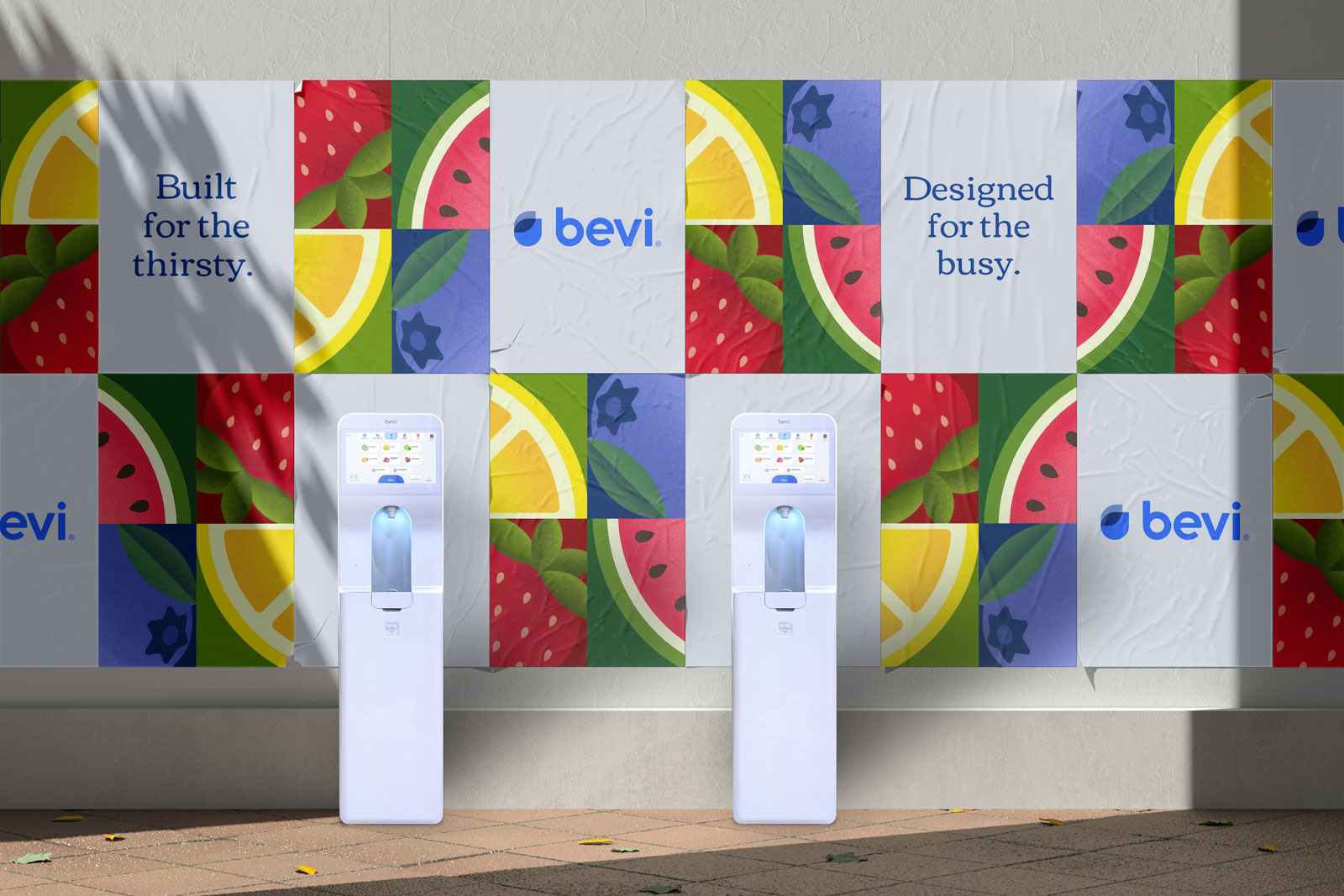
Context.
Bevi is a Boston-based startup that defined a category that barely existed at the time: the smart water cooler. The product replaced single-use plastic bottles in office and commercial environments with a connected machine that dispensed sparkling and flavored water on demand, monitored its own consumables, and reduced an office's beverage-related plastic waste to near zero while keeping employees hydrated and happy.
The company's story was built on the values that came with that proposition. Sustainability meant the end of single-use plastic bottles at work. Health meant better hydration, less sugar and no aluminum cans piling up in recycling bins. The pitch was directed at company employees initially, encouraging them to enact change through their leadership and finance team: a wellness benefit and a sustainability win, justifying the cost of a connected machine over a traditional water cooler.
I joined as the first Visual Designer reporting to the Director of Marketing, Frank Lee, a Bevi co-founder, during the close of the Series B raise, with Series C on the horizon. The inherited brand expression had a working positioning (the smart water cooler. The cooler water cooler.), a visual system, and growing momentum in the market. Sales were rising on instinct. The team's understanding of who was actually buying was implicit, not articulated.
What I saw, and how I saw it.
The insight started with a methodology choice, not a finding.
Customer photoshoots were part of my responsibilities: capturing Bevi machines in real office environments with real emotions for campaign and web use. The official reason for being on site was the camera. The unofficial reason, the one that mattered most to me, was the people who happened to be present at every shoot: the office managers.
They were the ones who'd scheduled the shoot. They knew where the machine was. They knew how it was used. They knew the water technicians by name. They had opinions about everything from the flavors employees preferred to how they liked the CO2 mixture. And once I started asking, they had opinions about why Bevi had been chosen in the first place, opinions that didn't match the story the company was selling.
I followed those conversations with structured outreach: a survey to as many office managers across customer accounts as would spare the time, asking what had made them champion Bevi internally over alternatives, and what they told leadership when justifying the purchase.
The finding: sustainability and health weren't what got Bevi approved. They were part of the narrative that the employees loved and wanted to be a part of. Finance and leadership mostly needed the numbers to sign off; the values helped justify the line item. But the actual buying decision was driven by the office manager, and the office manager wasn't buying a sustainability product. They were buying one less thing to manage.
The Bevi machine handled itself. Flavor refills, CO2 changes, maintenance: all triggered automatically through the connected platform, with Bevi staff arriving before the machine had a chance to fail. For a person whose job was already a thousand small operational fires, that operational invisibility was the entire pitch.
Put simply: Bevi was selling itself as a wellness and sustainability product. It was being bought as an operational relief product. The brand needed to serve both audiences, but the messaging hierarchy was inverted. The story employees wanted to hear had become the primary expression. To the actual approver, it sounded like just another cool product fad.
The move.
At a Series B startup with a flat structure, brand changes don't go through decks and approvals. You make the next piece of work better and let it speak for itself.
I didn't pitch the reorientation through a formal process. I built it into the next outputs. Sales collateral began leading with operational ease, the value the actual approver felt every day, then laddered down to sustainability and health as the justification stack for the broader buying committee. An office-manager narrative began appearing alongside the existing wellness story across all brand and marketing collateral, speaking to operational reality, not just category virtue.
Nothing was thrown out. The sustainability and health stories stayed, but moved to second place, as the reasons the purchase made sense once the office manager had already decided she wanted it.
Before.
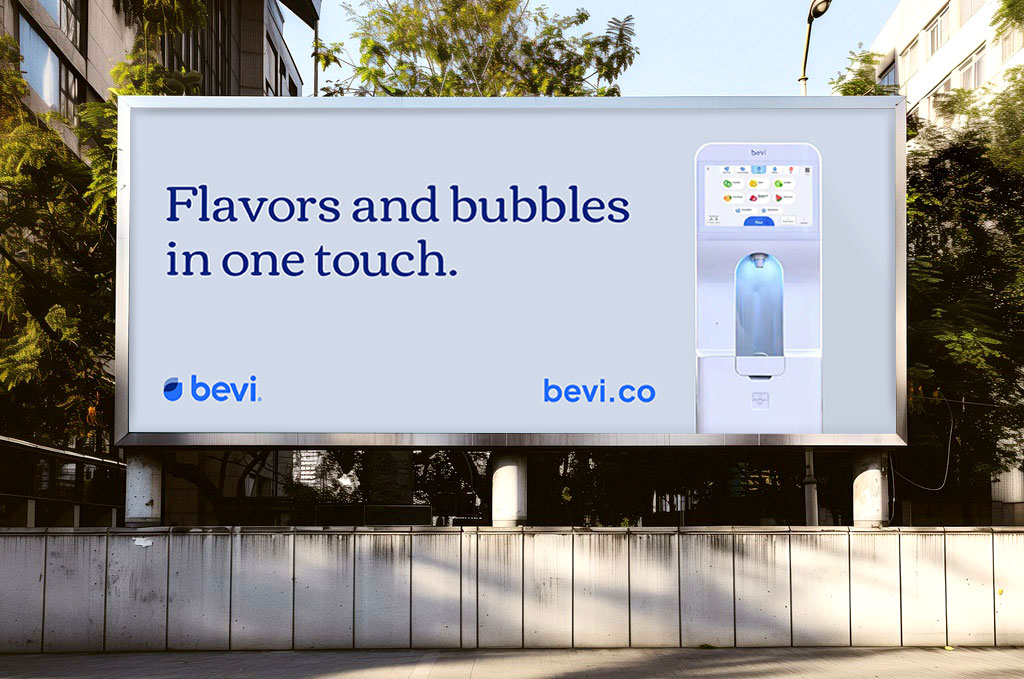
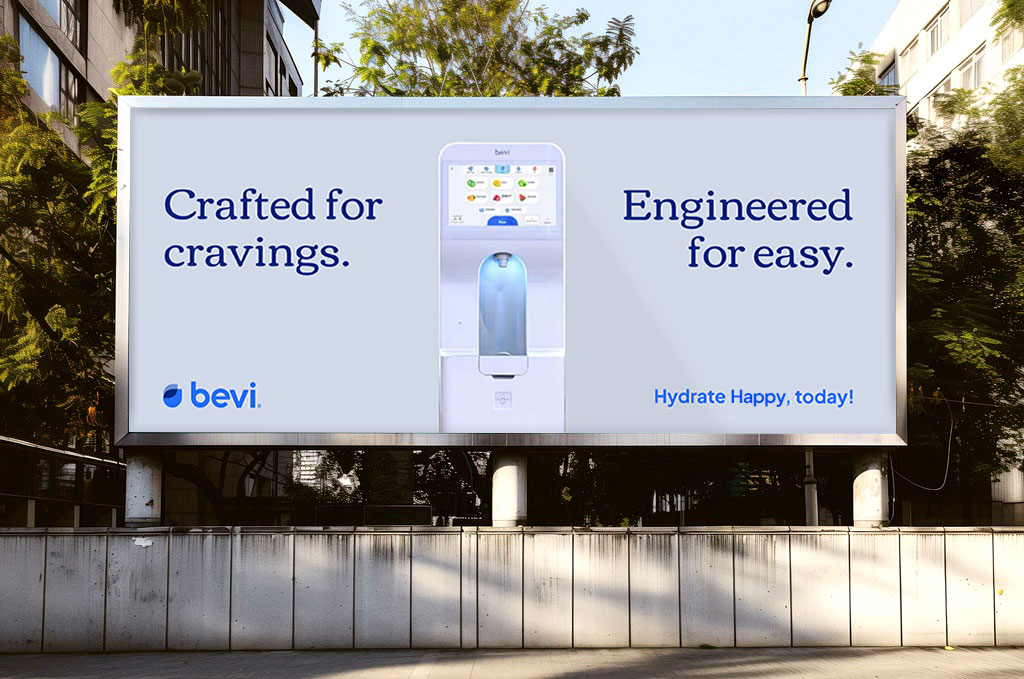
After.
The work.
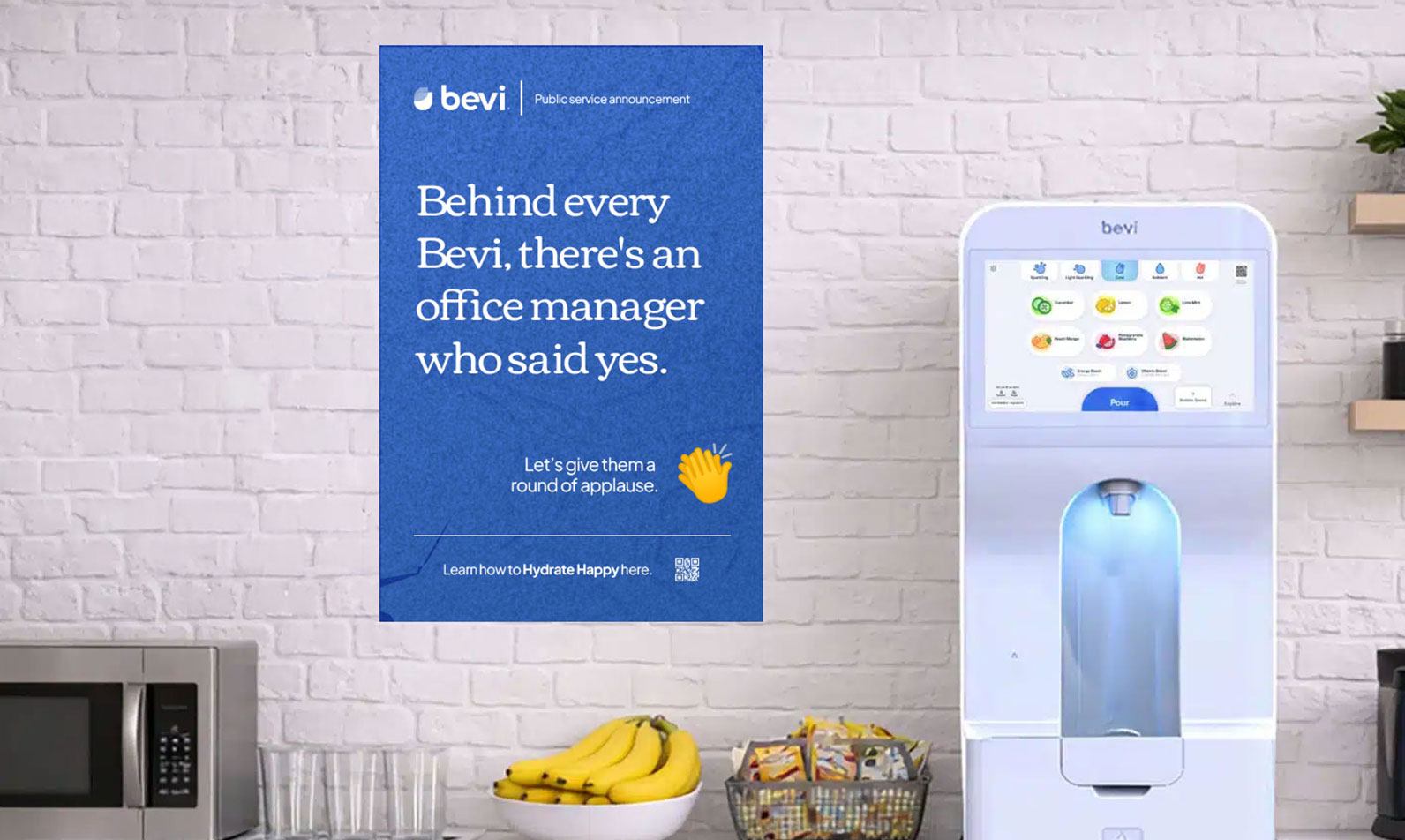
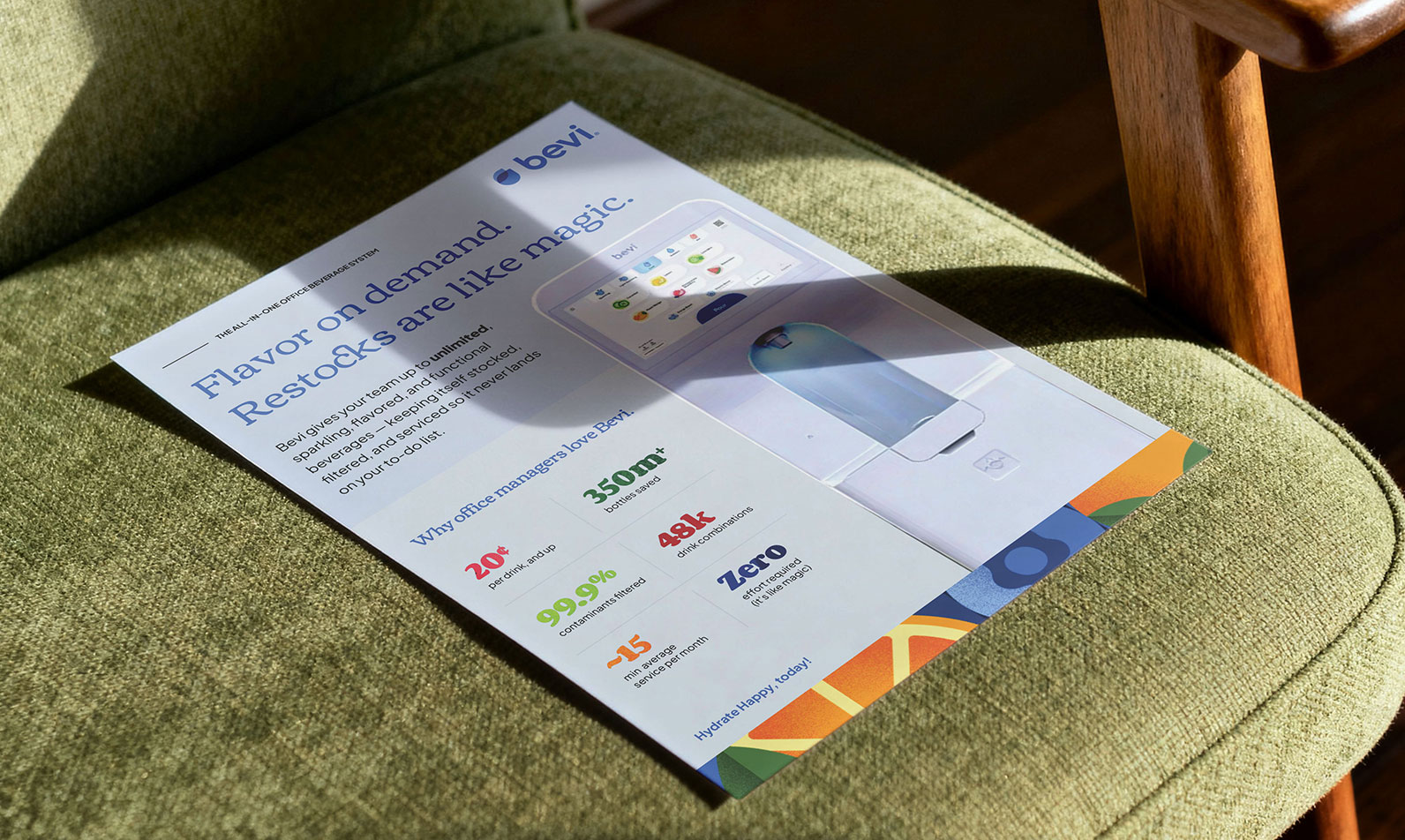
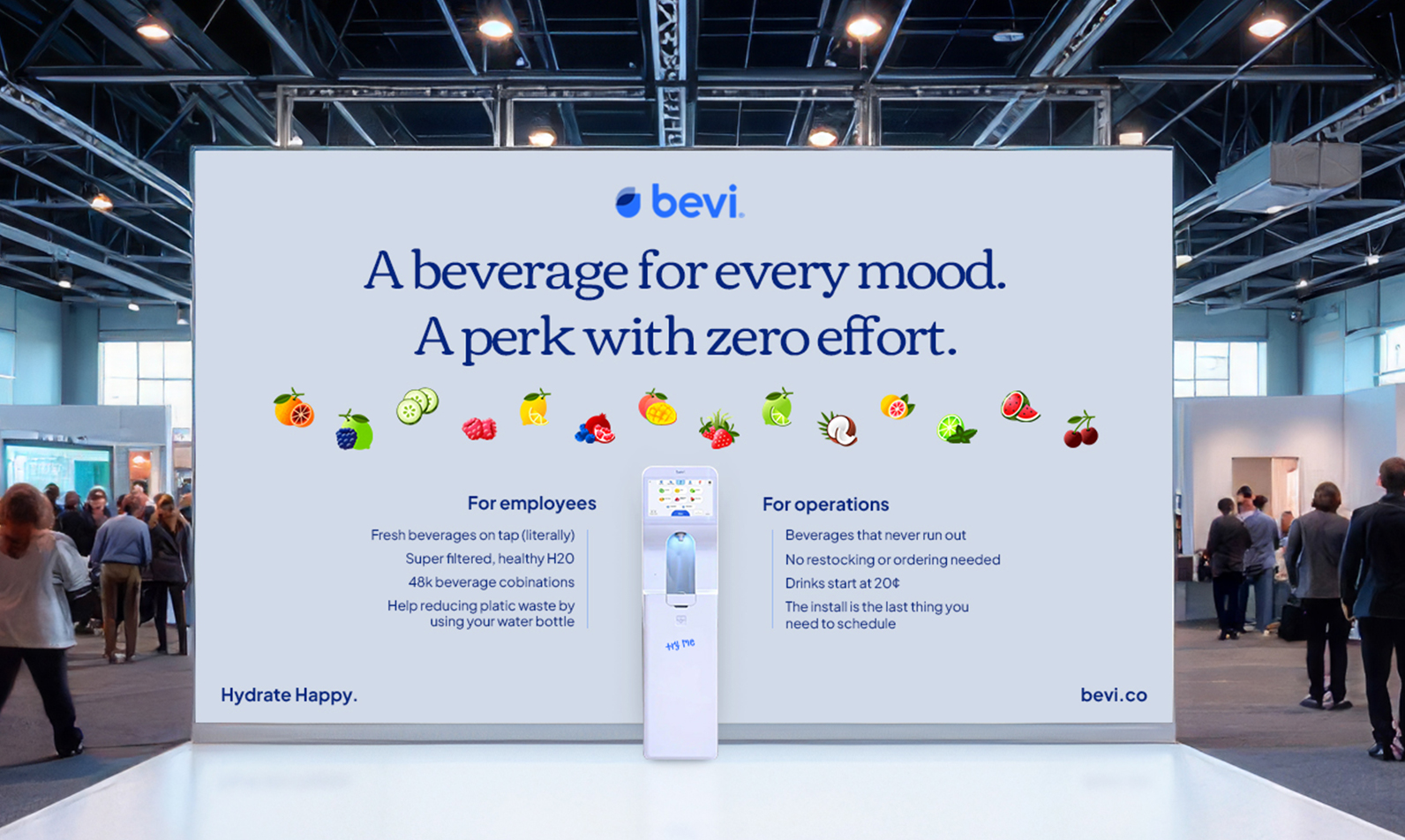
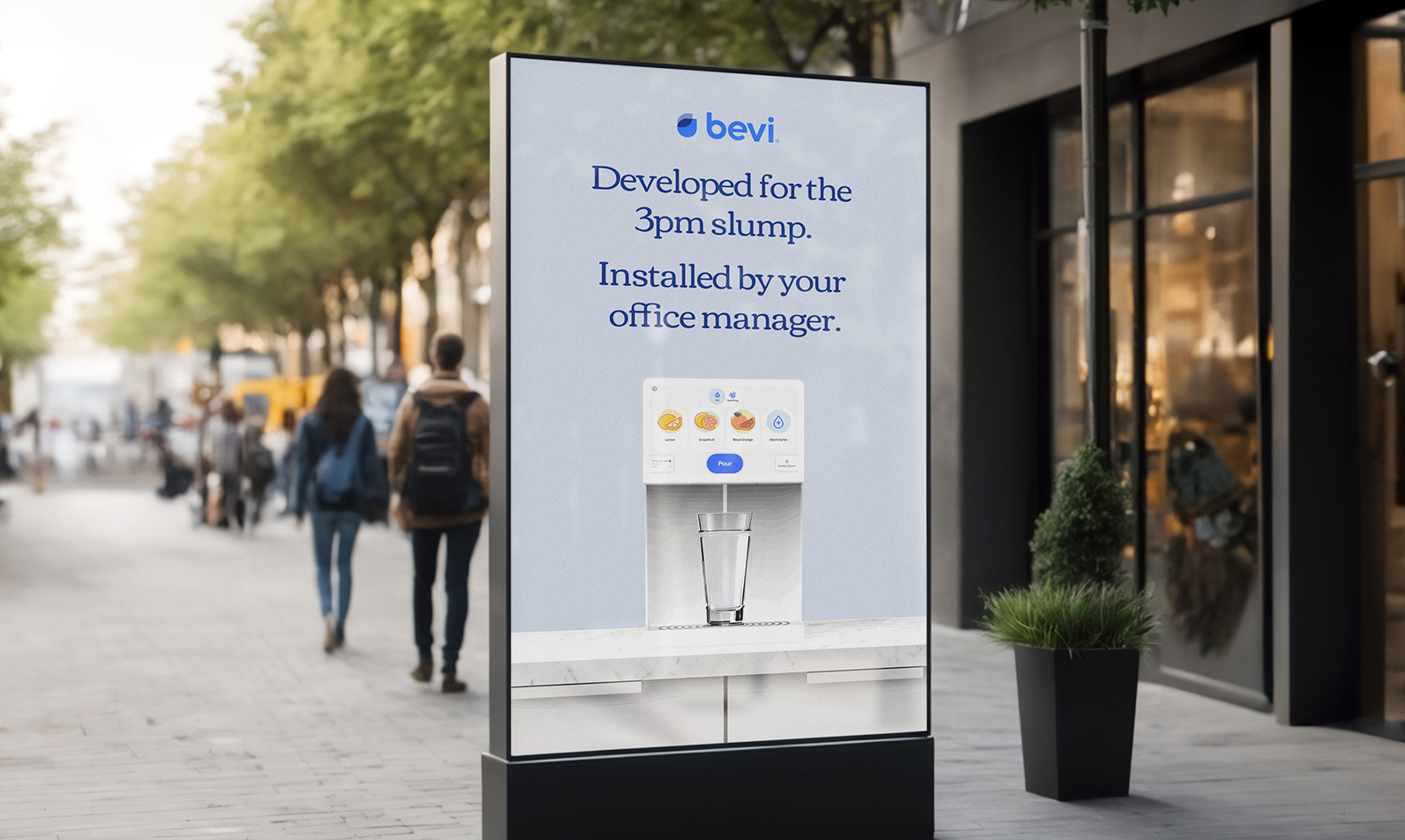
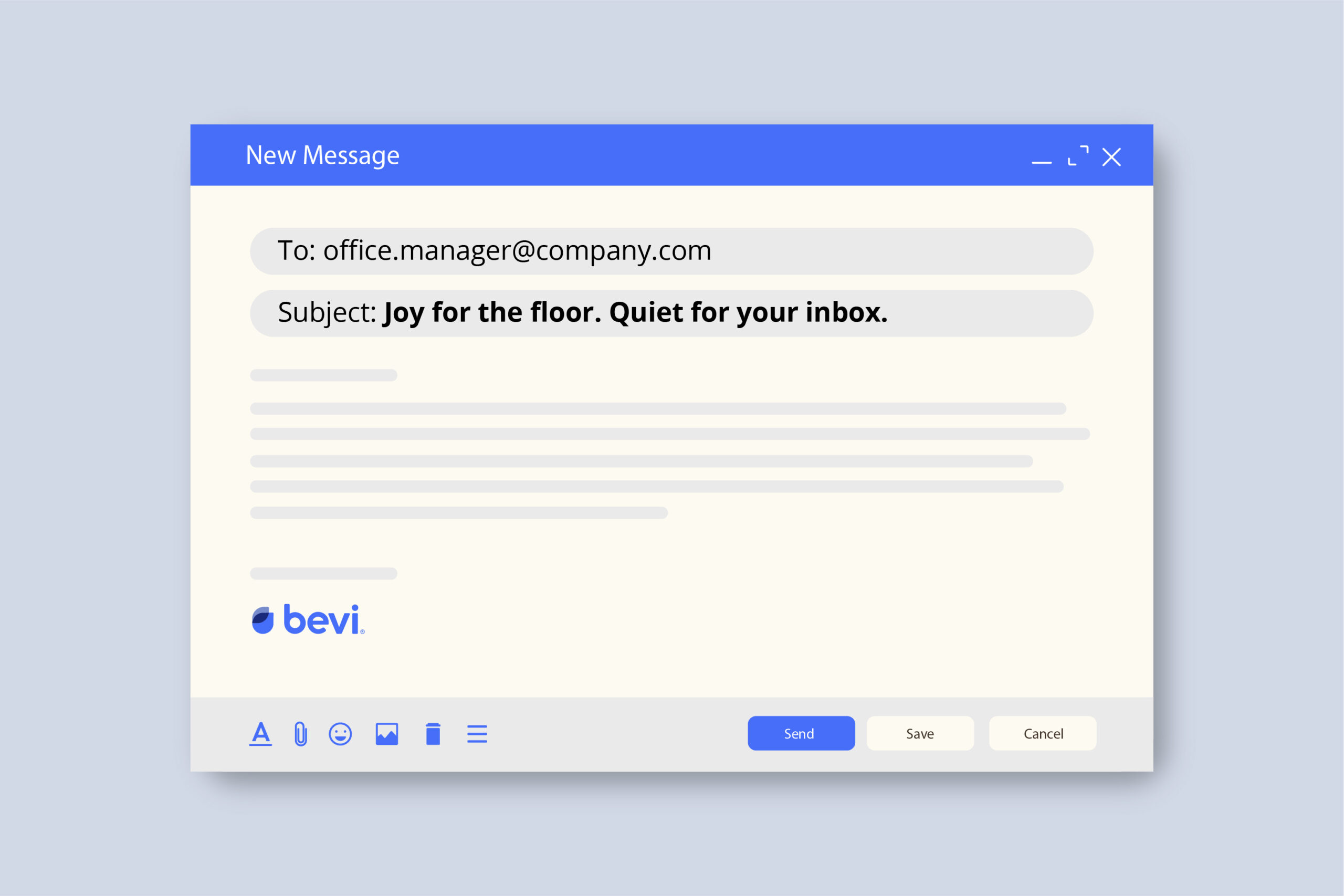
Each output served the same strategic move: in parallel, surface the operational story the actual approver was buying, without abandoning the values story the broader buying committee needed.
What it did.
Between October 2016 and July 2018, the period spanning Series B to Series C, Bevi's sales grew 900%. The brand work was one of several factors. The product team, the sales team, the founders' execution, and the timing of the broader sustainability category all played meaningful roles. The growth wasn't caused by the brand alone, and claiming otherwise would misrepresent how startup growth actually works.
What I can say for sure: during the most consequential growth period of the company's life, the marketing was talking to the right person about the right thing. The reorientation of the messaging hierarchy meant that the brand work was pressure-tested in real time at commercial stakes, and it held up. Whether it drove the growth or supported it, it didn't get in the way, and at that stage of a startup, that matters.
Reflection.
Bevi taught me that what a company thinks it's selling and what the buyer is actually buying are often two different stories.
The job was to put both stories in the right order. Sustainability and health were true things about Bevi. They mattered to the buying committee. They earned their place in the story. But they weren't the reason the purchase got made. The reason the purchase got made was an office manager who needed one less thing on her plate. And until the brand spoke to her directly, the company was effectively selling around its own buyer.
I use that on every project now: work out who actually makes the decision, and lead with what matters to them, even when it's less inspiring than the values story.
Good brand work describes a business the way its buyers would recognize it.
Credits.
Visual Designer, reporting to Director of Marketing and Co-founder. Brand identity, campaigns, website, sales collateral, trade show, OOH. Bevi raised Series C in 2018; I joined OneBeacon (now Intact Insurance) shortly after.