home /// brand strategy /// The CTA was access to a platform. The outcome was a bigger broker network
BondClick (Intact Insurance) · Surety · Creative direction
The CTA was access to a platform. The outcome was a bigger broker network.
The relaunch campaign for BondClick: an online surety bond binding platform. Growing the active broker network by 66%, increasing bond volume 148%, and laying the creative foundation for international rollout to Canada and the UK.

Context.
BondClick is an online platform where surety bond brokers can place, bind, manage and report on bonds. It compresses a process taking days or weeks into minutes. It was built by Intact's Surety division as a competitive convenience tool in a category where most carriers still operated on legacy submission processes. The platform had been soft-launched to a select broker group; this was the formal relaunch with new features and a broader audience.
The business question the campaign needed to answer was double-sided. Surety wanted more bond volume from existing approved brokers, who would use the platform's efficiency to do more business with Intact rather than competitors. It also wanted more approved brokers in the network, since an approved broker could place not just surety bonds but business across the entire Specialty book. One goal was about depth in the existing relationship. The other was about expansion into new ones.
The tension: "become an approved Intact broker" is a slow, paperwork-heavy commitment that doesn't make for a compelling marketing ask. The platform's value was self-evident. The relationship behind it was anything but.
What I saw.
The diagnosis was about the CTA, not the message.
The broker approval process was already built into the platform: anyone requesting access to BondClick necessarily went through broker approval as part of onboarding. The marketing default would have been to lead with the platform's features and treat broker approval as a downstream consequence buried in the fine print. That instinct would have produced a respectable campaign and a meaningfully smaller commercial outcome.
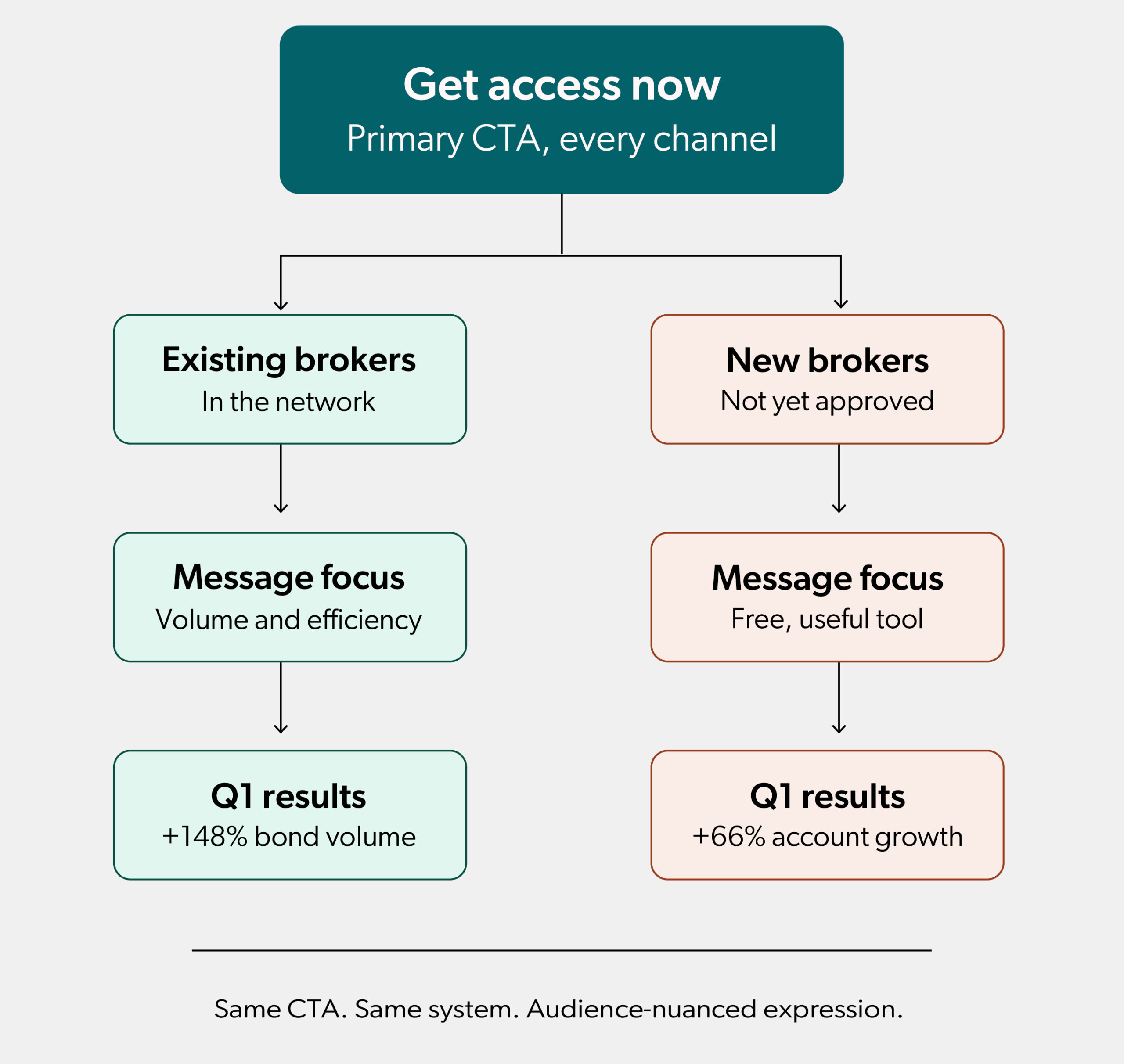
The strategic move I identified was to invert the hierarchy. Request Access became the primary CTA across every channel. The platform was the visible offer. The broker relationship was the structural consequence.
I made the case for this internally in two ways. The first was a behavioral argument: "Request Access" is a small, useful, free thing. "Apply to become an approved broker" is a large, abstract, time-intensive thing. Same backend process. Two completely different psychological asks. Lower the perceived cost of the entry point and more brokers walk through the door.
The second was a category argument. BondClick was milk at the supermarket: a convenience offer that wasn't there to generate direct revenue but to create the conditions for everything else. The difference was that no other carrier in the category was selling milk. The platform was a genuine competitive convenience play, but its highest-leverage function was as a recruitment funnel for the broader Specialty business. So I built the campaign around the access, not the product.
Match the ask to the broker's actual psychology. Let the backend do the work.
The move.
I operated as the creative lead within a three-person MarComm team, alongside the Director of Marketing US and a Senior Marketing Manager, and worked cross-functionally with the BondClick product and engineering teams and Surety leadership to translate the platform's capabilities into audience strategy.
The discovery work surfaced two distinct audience segments with materially different needs. New brokers had no existing Intact relationship; they needed the platform pitched as a free, useful tool worth the cost of approval. Existing approved brokers were already in the network; they needed the platform pitched as a volume and efficiency unlock for the business they were already doing. Each audience got its own messages and tactics, all tracing back to the same architectural decision: Request Access as the primary CTA, recalibrated for the audience's existing relationship to Intact.
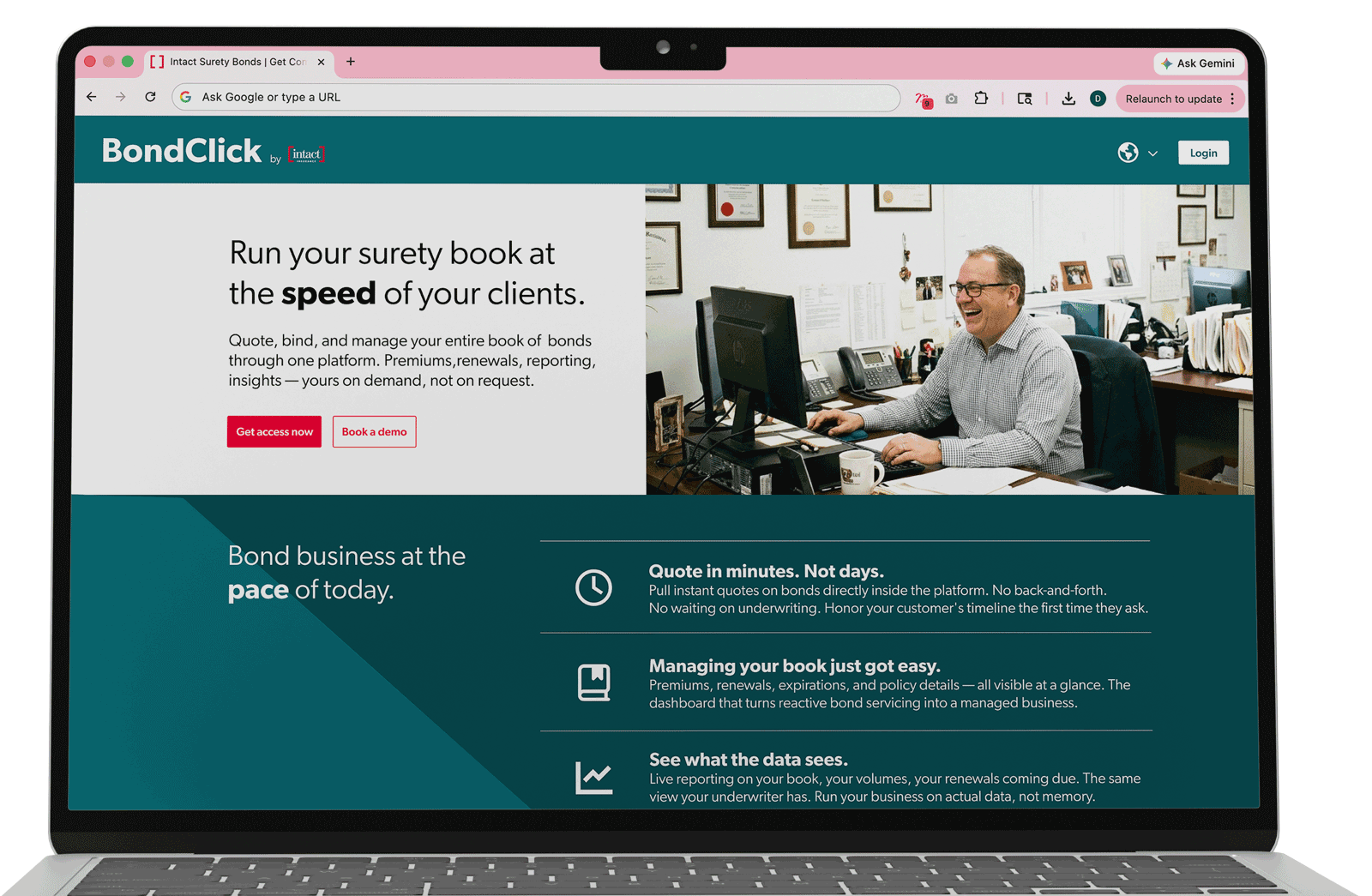
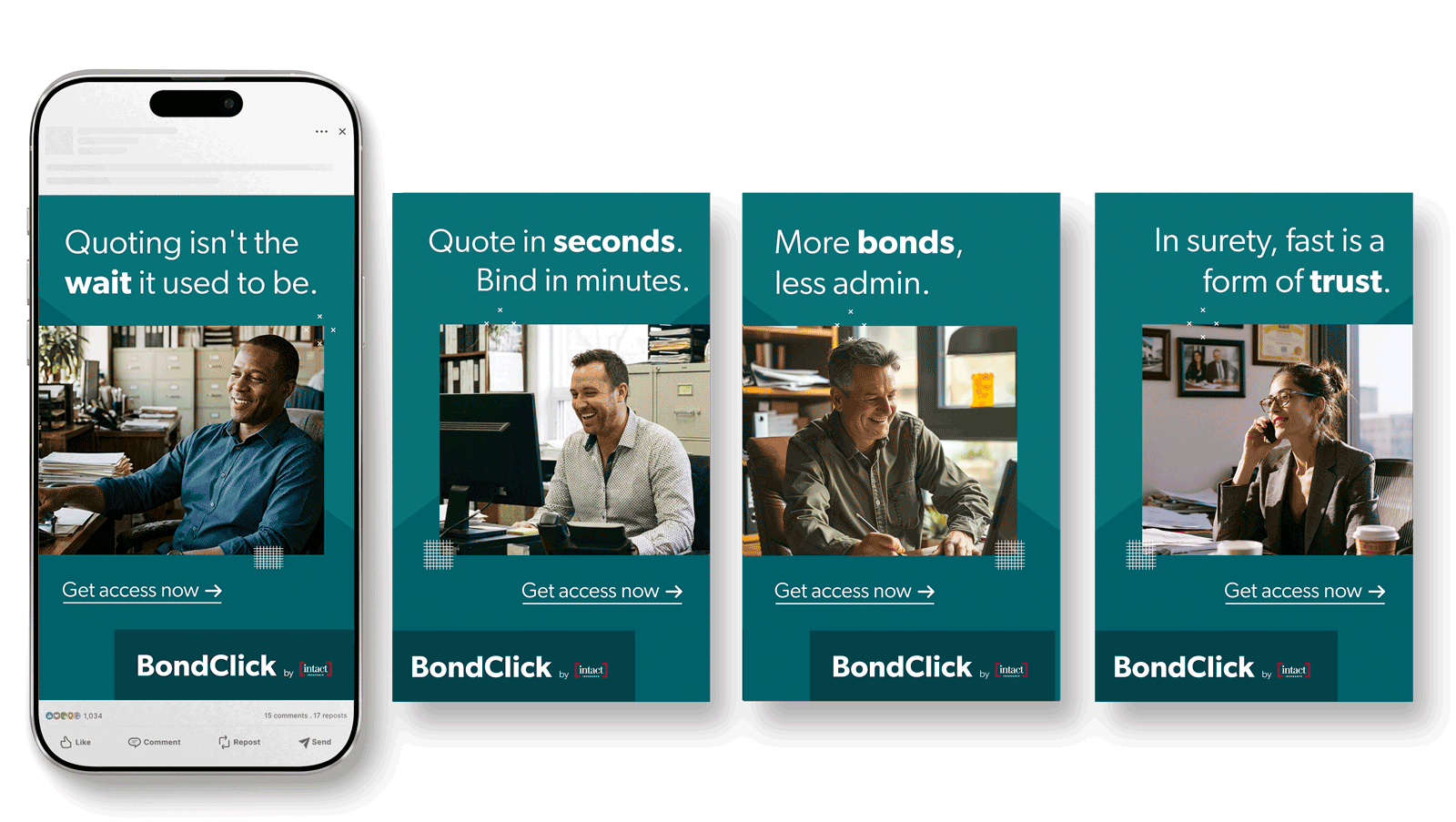
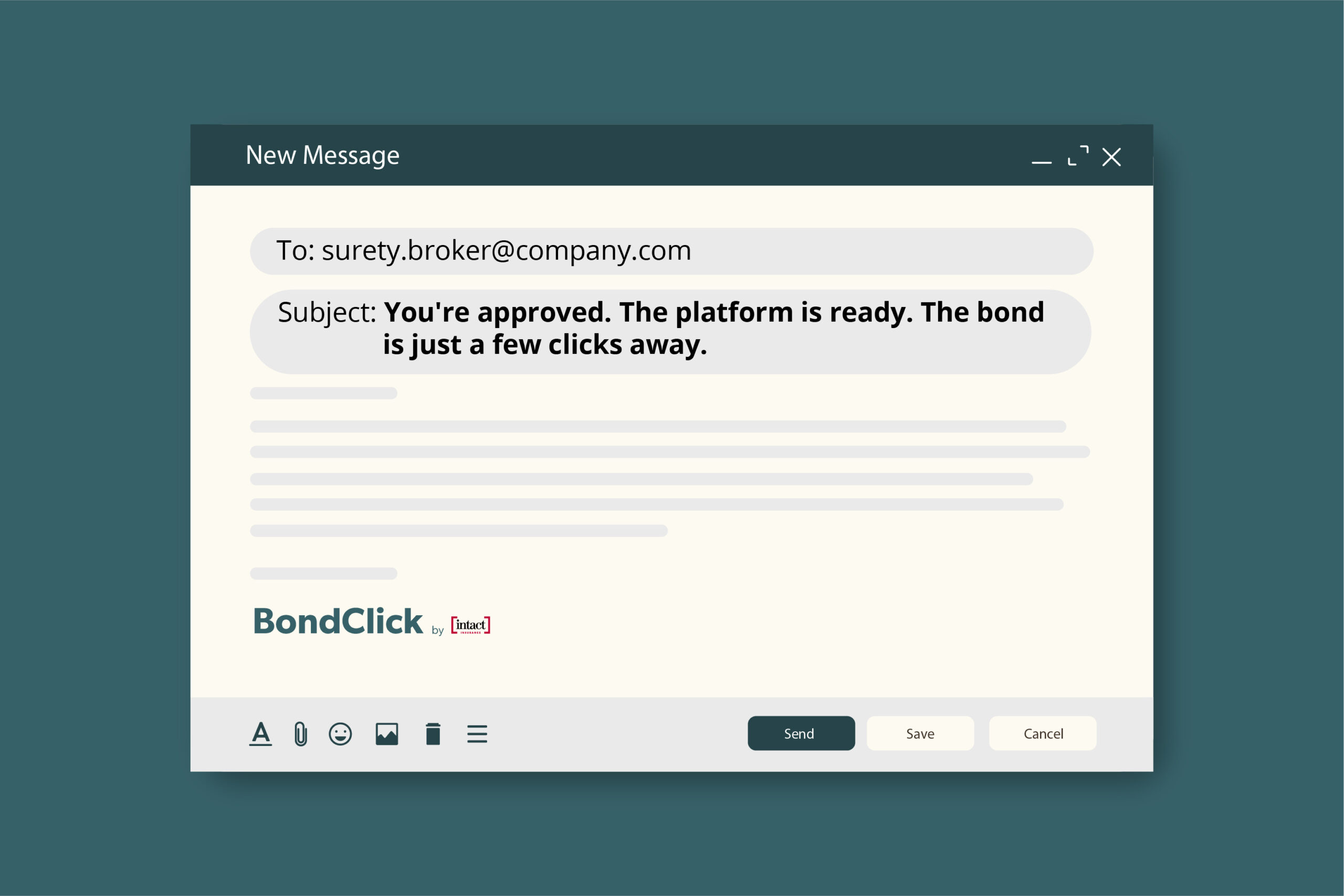
The campaign system extended across digital, OOH, print, and email. Demo videos were scripted to be short and direct, paced for brokers evaluating a tool in the margins of a busy day. A highlight sheet anchored trade conference presence, where Surety leadership used the campaign materials during a broker-facing industry panel. Creative direction was mine end-to-end. The demo videos were produced with an external production company under my creative direction, with scripts shaped in consultation with me to hold the bite-size discipline.
The work.
Each output served the same strategic architecture: Request Access as the front door, audience-tuned messaging behind it.

What it did.
Comparing the first quarter following the relaunch to the same quarter the year before. That baseline included the platform's soft launch period, making the comparison more rigorous than a pre-launch reference would have provided:
Active broker accounts grew from 339 to 564, an increase of 66%. Bonds bound grew from 377 to 934, an increase of 148%. Premiums written grew 91%.
The three numbers build on each other. The 66% account growth is the proof that Request Access was working as designed, pulling brokers into the Intact relationship through a lower-friction entry point than the broker approval process would have generated on its own. The 148% bond increase confirmed those new brokers weren't dormant accounts. They were placing business, and existing brokers were placing more of it. The 91% premium growth is the dollars-on-the-table outcome: the figure Surety leadership measured the work by, and the figure that authorized the international rollout that followed.
The premium growth ran behind the bond volume growth, and that gap is informative. It suggests the newly-acquired brokers were placing smaller bonds first, which is exactly the behavior you'd expect from a network expansion play during its first active quarter. New brokers ramp on the easier business and grow into larger placements over time. In other words, the campaign delivered the kind of volume that compounds.
Within six months of the US launch, the creative system and audience approach were exported to Intact's Surety divisions in Canada and the UK. Both were newer Surety markets where the new-broker acquisition angle was the primary application. The existing-broker volume play didn't yet apply because the existing-broker network was still being built. The fact that the creative system traveled across markets at different stages of development is the case study's scalability proof. The system worked in markets at very different stages because the core idea was about the CTA, not the message.
Reflection.
BondClick showed me how thin the line is between brand work and growth work.
The Request Access decision was less a creative or copywriting choice than a strategic decision about what the campaign was really asking, and that's the same kind of decision a brand strategist makes when defining what a brand is really for. Asking the right question is the work. Everything after that, from the creative system to the audience tuning and channel mix, serves whatever question got asked first.
The lesson I took from it: get clear on what you're actually asking the audience to do before you worry about how you ask it. Campaigns that get the what right can survive imperfect execution. Campaigns that get the what wrong can't be saved by craft.
The milk-at-the-supermarket framing was useful internally because it gave leadership permission to value the campaign for something other than direct revenue. But its real function was strategic: it named what BondClick was for. A convenience offer in a category that didn't have one, deployed as the front door of a broker recruitment funnel. The 66% account growth is the proof that naming the function correctly was the campaign's highest-leverage decision, and it was made before any creative work began.
Credits.
Creative direction, end-to-end. In collaboration with the Director of Marketing U.S. and the Senior Marketing Manager. Cross-functional work with the BondClick product and engineering teams and Surety leadership. External video production under my creative direction. Campaign system subsequently exported to Intact Surety divisions in Canada and the UK.