Intact Insurance · Brand strategy · Self-initiated
Surfacing a strategic gap leadership hadn't named.
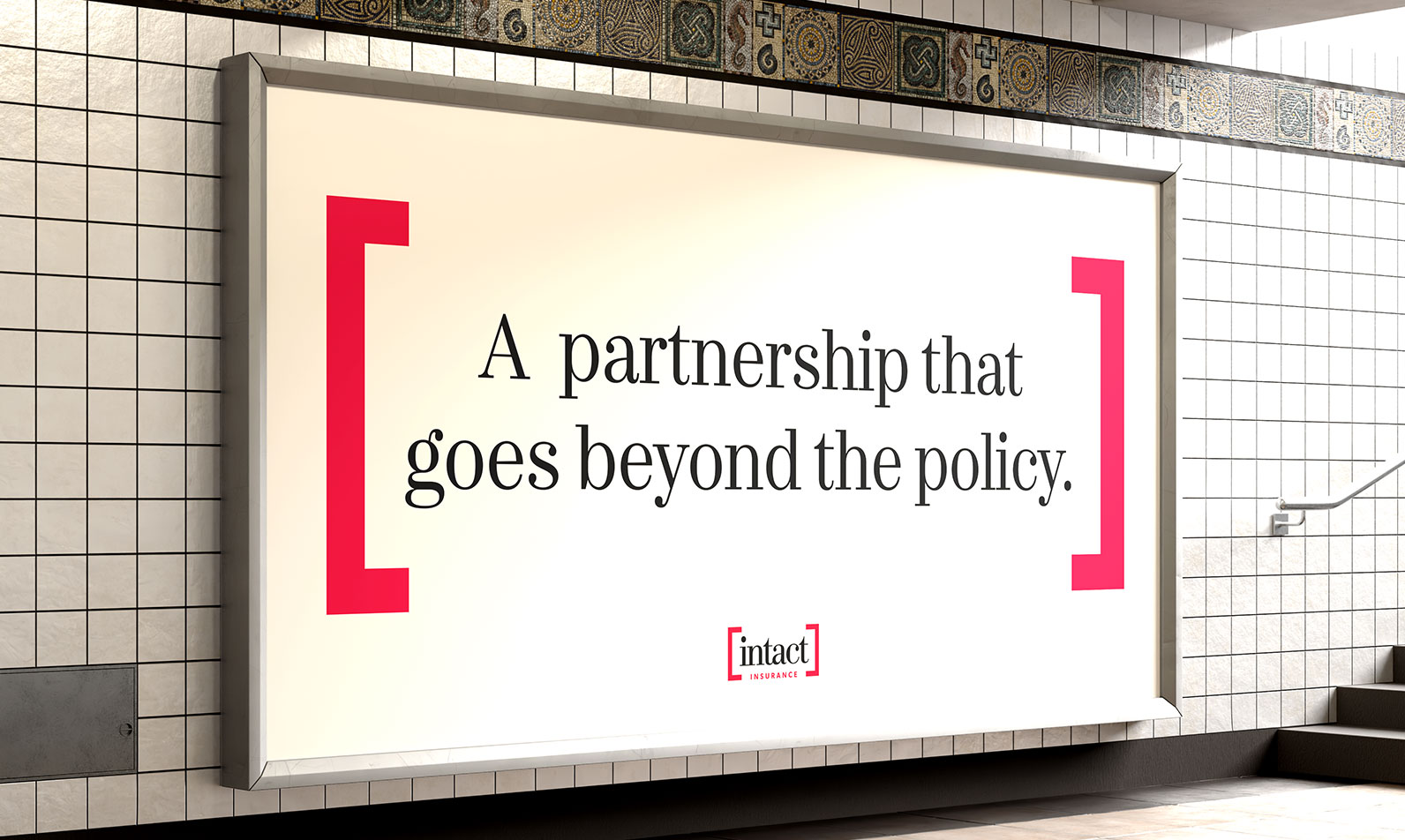
A brand messaging framework built to make the case for a more deliberate brand model in a global specialty insurance business growing faster than its brand architecture.
Context.
Intact has grown from the leading Canadian personal lines insurance carrier into a global enterprise, with personal lines in two countries and specialty lines across more than 150 territories and 20+ verticals. The Specialty division represents the company's most significant growth opportunity: under 1% share in a fragmented global market where the competitive set behaves more like consulting firms than consumer carriers.
However, the brand model: the messaging architecture, the communications discipline, the operating assumptions about how brand drives business, was built for the personal lines business, where the category dynamics and audiences are entirely different. Personal insurance is a low-consideration, near-commodity purchase where brand exists to stay top of mind. Specialty insurance is the opposite: a high-consideration, broker-mediated, multi-year partnership where brand drives placement when capacity and price are at parity.
The result was fragmented messaging across products, regions, and platforms. Individual lines communicated effectively in isolation, yet the collective group lacked a consistent point of view. Brand decisions followed established habits more than the division's global growth ambitions.
The cost wasn't visible on a balance sheet, but it was real. In a category where brokers and their customers choose partners they trust to be there for the long term, Intact Specialty risked sounding like a different company in every conversation, with varying values and selling points, instead of building one unified reputation.
What I saw.
The diagnosis I arrived at: the fragmentation wasn't a marketing problem. It was a symptom of a brand model built for a different category.
The brand model rested on a reasonable assumption inherited from personal lines: that brand works the same way in specialty. Both were insurance. Both served customers. Both needed marketing. The mental model was largely consistent across the two businesses, and the brand model followed.
But the two businesses compete in different categories. Personal lines competes on awareness, price, and ease. Specialty competes on relationships, expertise, continuity and accessibility. The brokers placing specialty business aren't choosing a product off a shelf, they're choosing a partner whose underwriters, claims handlers, and risk specialists they'll work alongside for years. In that world, brand is what makes a broker pick up the phone when capacity is tight, when a difficult risk needs placing, when a claim needs handling with judgment rather than process, and their customers need to know that they are in the safe hands of a true industry leader.
The fragmented messaging was the visible symptom. The deeper opportunity was to give the company a unified point of view about what it stood for in the only category where that point of view actually drove placement decisions.
The move.
Nobody asked me to build a brand messaging framework. I built one anyway, as a structured argument for why the brand model needed to change and what that change could look like.
The choice to make it self-initiated was deliberate. Escalating the problem through normal channels would have produced a meeting and a request for more data. Building the artifact first reversed the dynamic: instead of asking leadership to acknowledge a problem they hadn't named, I gave them a concrete proposal to react to. Reactions move faster than acknowledgments, and reactions are how brand initiatives get authorized.
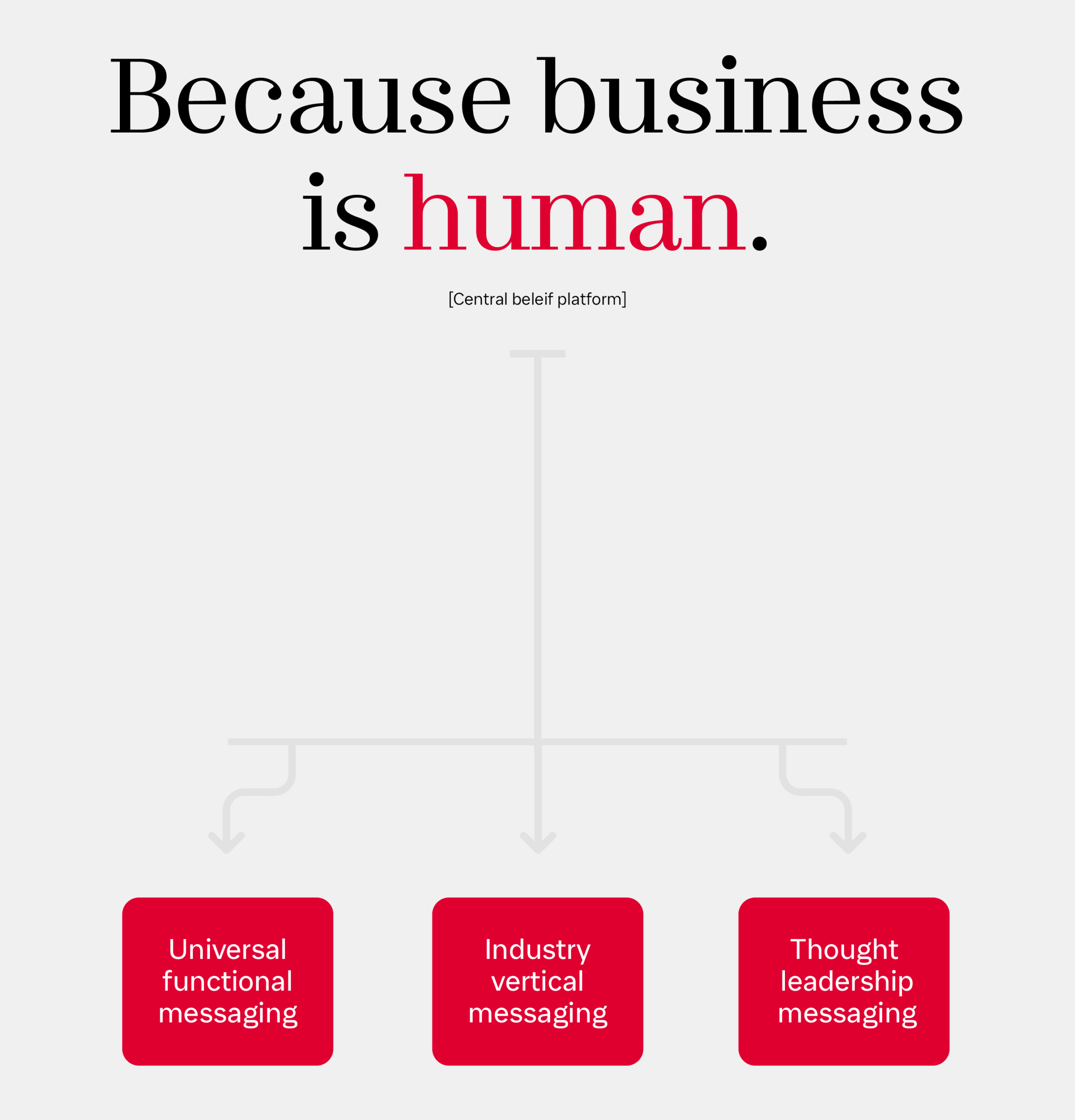
The framework's central belief, "Because business is human," was chosen because it reframes specialty insurance from a transactional service into a long-term partnership built on understanding, presence, and expertise. It gives functional messaging, vertical positioning and thought leadership a shared starting point, while letting each one sound like itself.
The framework.
The structure was built around one principle: consistent architecture, nuanced expression. The belief stays constant. The language adapts to function, vertical, and audience without diluting the underlying position.
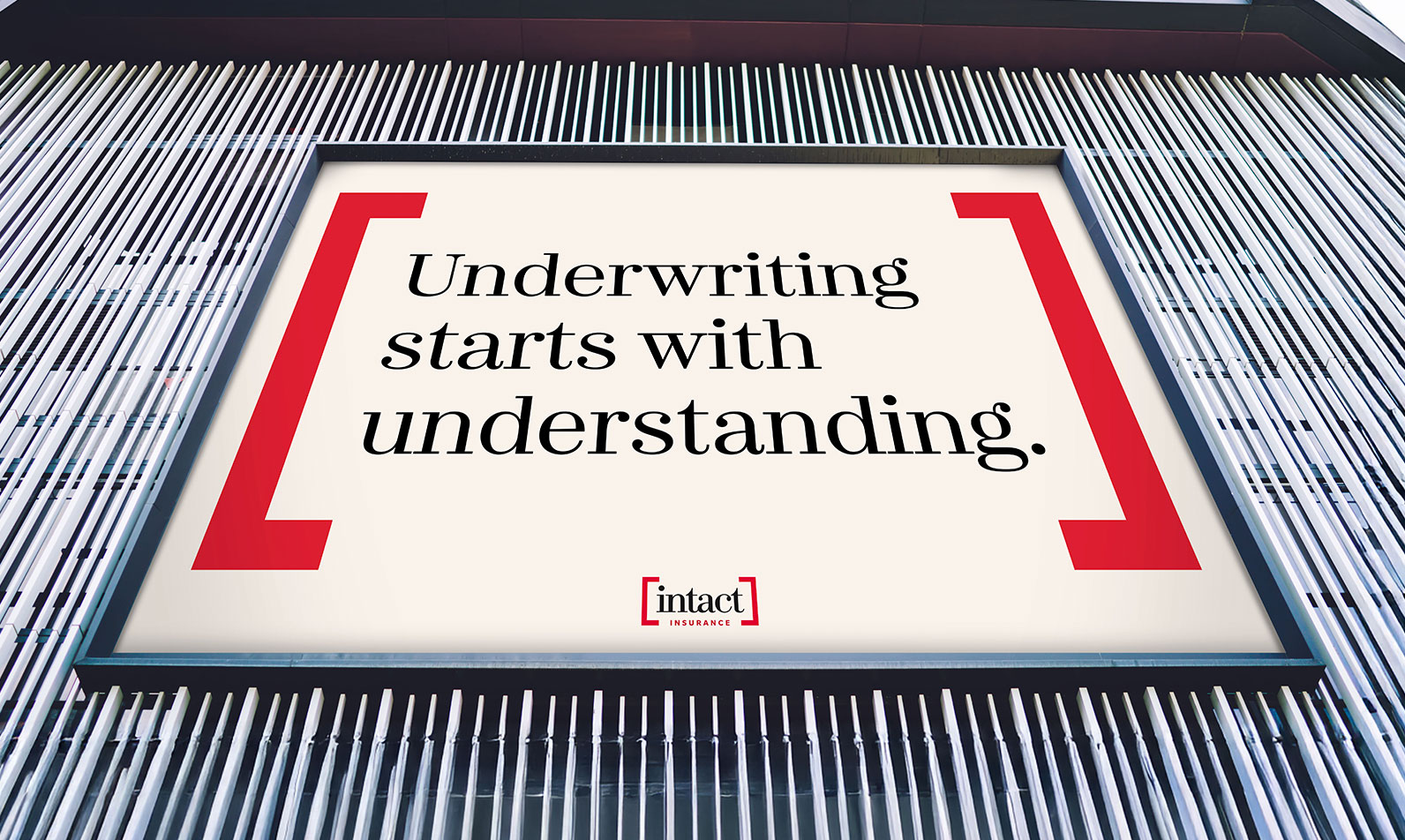
Functional messaging examples:
Underwriting
Claims
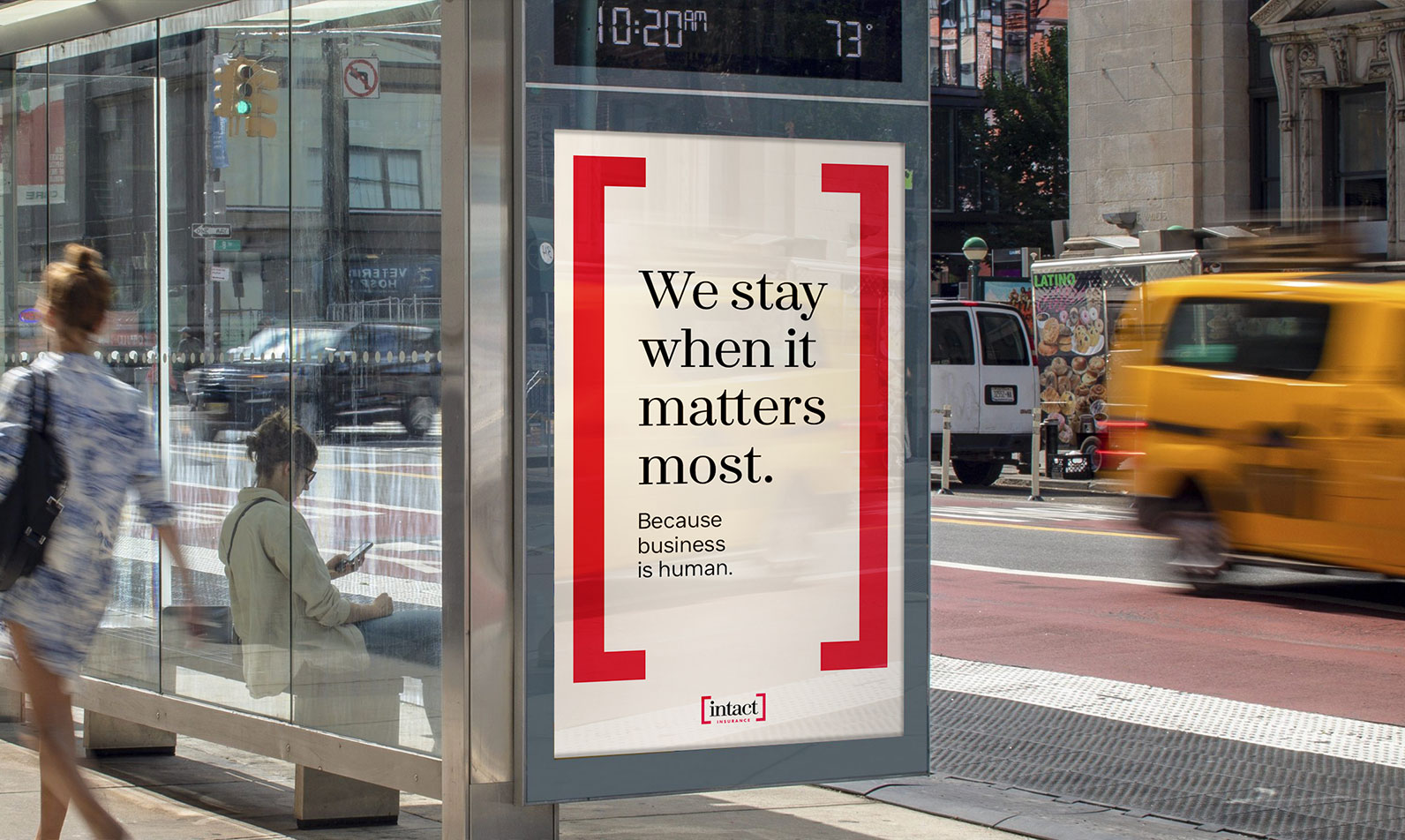
Functional messaging carries belief into the cross-business attributes brokers actually evaluate: underwriting discipline, claims handling, risk control. The belief shows up not in the words "we're human" but in the operating principles: underwriting that starts with understanding rather than pricing models; claims that stay engaged when it matters most. Risk isn't human, but risk decisions are.
Examples for Construction, Renewable Energy, Technology and Financial Lines. Same structure. Different language.
Construction > Energy > Technology > Financial
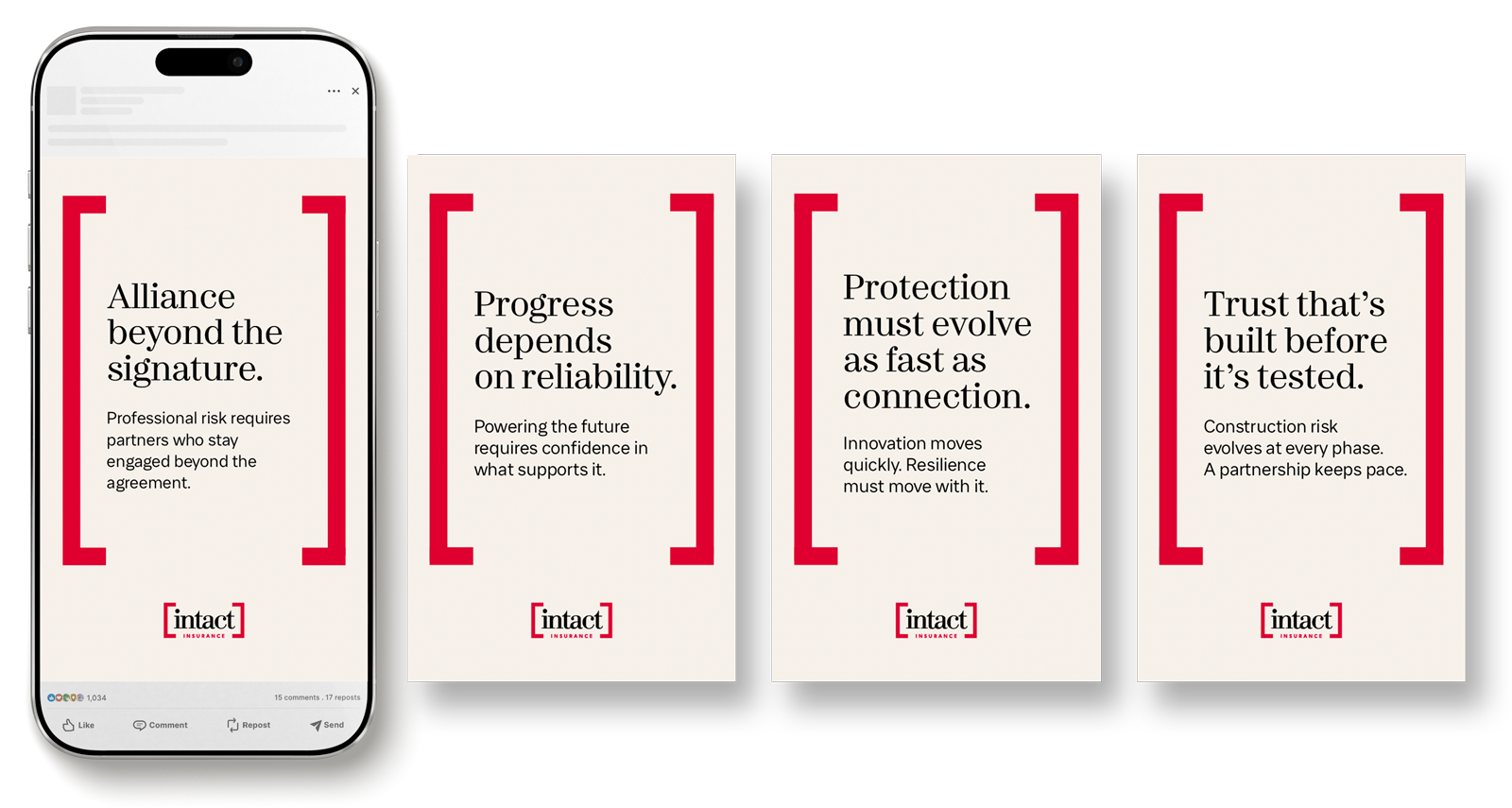
Industry messaging holds the architecture across verticals. Technology brokers hear about protection that evolves as fast as connection. Construction brokers hear about trust built before it's tested. Same belief. Same hierarchy. Different language tuned to the tension each industry actually feels.
Thought leadership
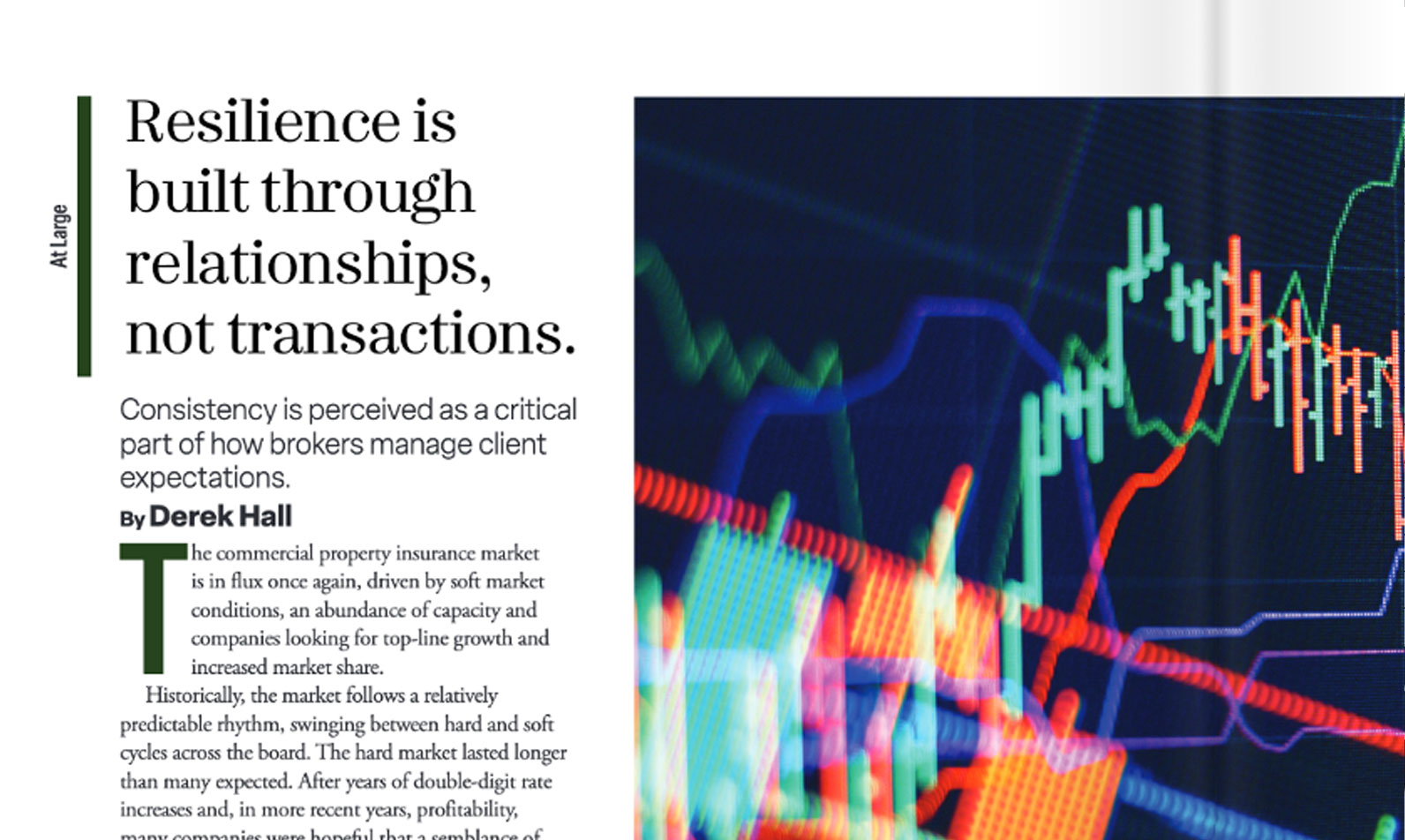
Thought leadership extends the belief beyond marketing, into industry publications, panel positions, and the conversations Intact's specialists already have with brokers and clients. The discipline here is positioning the company as a deeply knowledgeable participant in category-level conversations, not a product being sold inside them.
Governance.
The framework includes governance principles because a brand system nobody can put into practice won't last. Five principles guide how the framework gets applied:
1.
Start with the belief, not the product.
2.
Write values, not promises.
3.
Speak from experience, not functionality.
4.
Communicate partnership over transaction.
5.
Be human without being emotional.
Structurally, the model holds one belief, one shared messaging framework, and local adaptation without dilution. Regional and vertical teams can express the brand in language that fits their market and audience, but every expression ladders back to the same architecture. That balance of central belief and distributed authorship is what makes the framework durable as the business scales.
Where it stands now.
The framework is currently being socialized with senior leadership across the Specialty division. The intended next step is a pilot application in select regions/verticals, with measurement built in from the outset: broker recall, qualitative response from approved brokers, and downstream placement metrics in the pilot vertical compared to control.
Starting with a pilot is deliberate. A global brand overhaul is a hard thing for any leadership team to approve. A small, measurable test in one vertical is much easier, and if it works, it makes the case for going further.
Reflection.
What I'd do differently, in hindsight: lead with the business sponsor, not the framework.
The framework is a strong artifact, but it's a marketing artifact. It travels best through someone whose P&L is being affected by the problem it solves, a vertical head, a regional CEO, a head of underwriting for one of the larger specialty lines. The brand argument is more durable when it moves through a business leader who already feels the pain than through a document that has to convince people the pain exists.
At a big company, who carries the work matters as much as the work itself: who champions it, who measures it and whose budget it sits in. A strong framework without a business sponsor tends to stall. A decent one with a committed sponsor can change how a whole company sounds.
Next time, I'll find that sponsor first.
Credits.
Self-initiated, solo project. Built during late 2025 and early 2026.